The Felari
Children of soft steps and sharp stars
A Wandering People
Overview
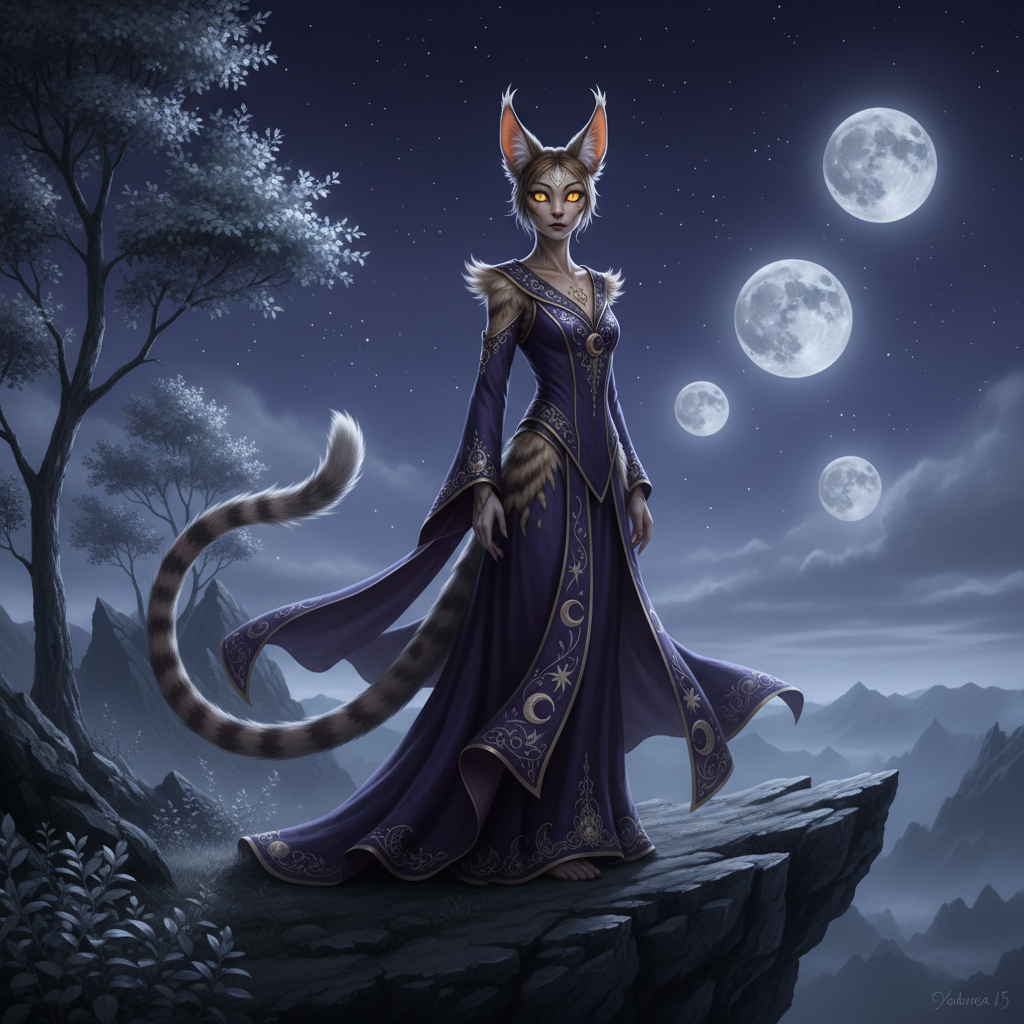
The Felari are a graceful humanoid race known for their feline ears, expressive tails, luminous eyes, and scattered tufts of soft fur along their shoulders, hips, and calves. At first glance, they appear mostly human — with human faces, bodies, hands, and posture. Their feline traits, however, are unmistakable: tall or rounded catlike ears, long balancing tails, slightly sharper canine teeth, slit or jewel-bright pupils, and a natural elegance in movement.
Felari are known across the world for their agility, emotional awareness, sharp instincts, deep clan loyalty, and powerful connection to moonlight, memory, and ancestral spirits. They are neither fully beast nor fully human, but something ancient and sacred between the two.
Many outsiders call them "catfolk," though most Felari consider that term crude. Among themselves, they are Felari — meaning "children of soft steps and sharp stars."
Physical Description
Felari have humanoid heads and bodies, with feline ears and tails. Their faces are human in structure, though often slightly sharper or more delicate in feature. Their eyes are large, reflective, and highly expressive, commonly appearing gold, green, amber, silver, blue, violet, or copper.
Their ears vary by bloodline. Some have tall pointed ears like desert cats, while others have rounded ears like lions, lynx-like tufted ears, or small sleek ears like jungle cats. Their tails are long, flexible, and highly expressive, often revealing emotions before words do. Felari have small patches or tufts of fur in specific places: along the tops of the shoulders, around the outer hips, down the backs or sides of the calves, and sometimes at the elbows, spine, or base of the tail.
- ◈Humanoid heads and bodies with feline ears and tails
- ◈Faces human in structure, often slightly sharper or more delicate
- ◈Large, reflective, highly expressive eyes — gold, green, amber, silver, blue, violet, or copper
- ◈Ears vary by bloodline: tall pointed, rounded lion-like, lynx-tufted, or small and sleek
- ◈Long, flexible, highly expressive tails that reveal emotions before words do
- ◈Tufts of fur along shoulders, outer hips, calves, and sometimes elbows, spine, or tail base
- ◈Fur colors: black, white, gray, tawny, brown, orange, cream, silver, golden, and patterned blends
- ◈Height typically between 5 and 6.5 feet tall
The First Songs
Origin of the Felari
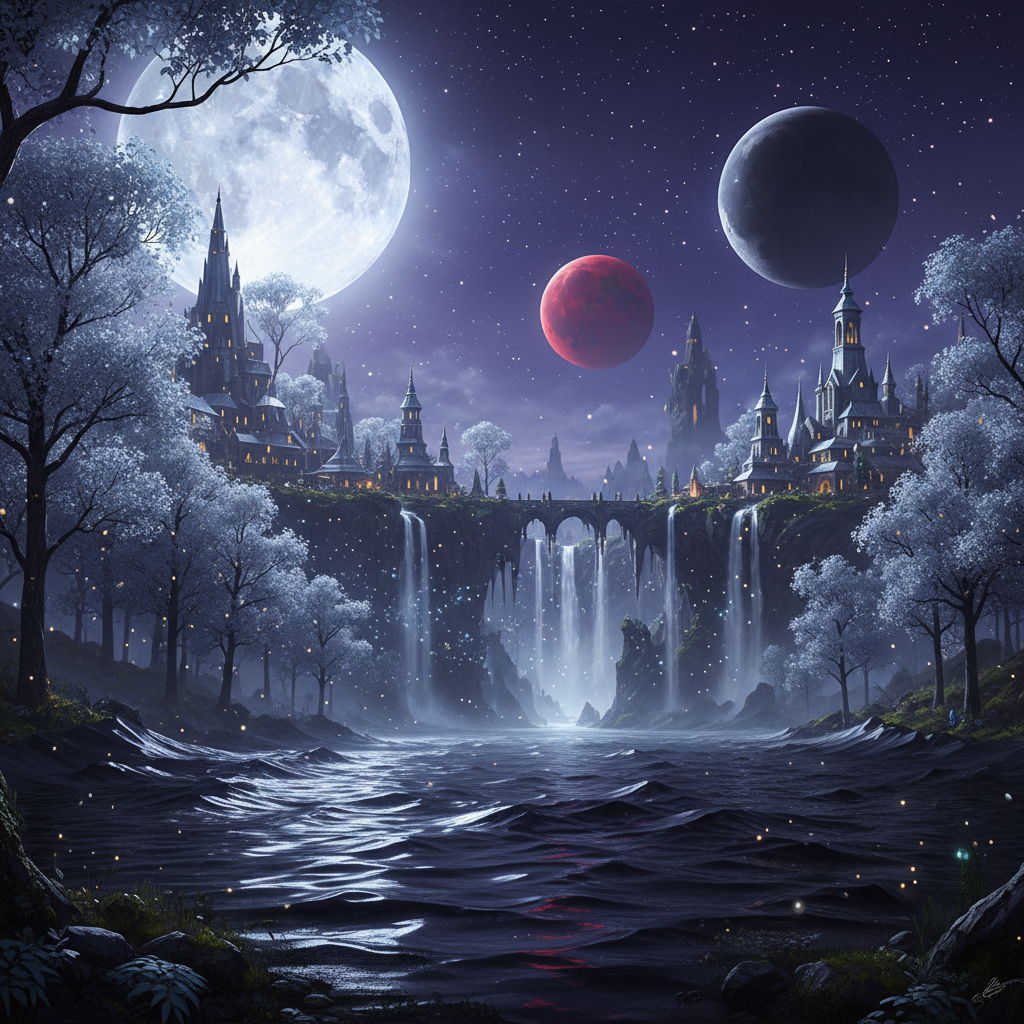
In the oldest songs of the Felari, there was once a world called Vel'Sahara — a land beneath three moons. It was a place of silver forests, glass deserts, warm seas, and cities built on cliffs where moonlight pooled like water.
The Felari were not born naturally, according to legend. They were shaped by a moon goddess named Aelunara, the Soft-Eyed Huntress. She watched the early humans struggle against night beasts, spirits, and starvation. She admired their courage but pitied their dull senses.
So Aelunara called upon the first cats of the world — the lion, the panther, the lynx, the tiger, the housecat, the snowcat, the sandcat, and the mooncat. From each she took a blessing.
From Humans
Ambition
From Cats
Grace
From Moonlight
Memory
From Shadow
Secrecy
From The Stars
Longing
Thus, the first Felari were born. They became guardians of thresholds: between night and day, between civilization and wilderness, between memory and dream, between life and spirit.
The Catastrophe
The Fall of Vel'Sahara
For thousands of years, the Felari prospered. They built moon temples, star bridges, jungle citadels, desert markets, and high mountain observatories. Their world was peaceful for an age, but peace made them proud.
The great clans began to argue over which moon held the true blessing of Aelunara. The Silver Moon represented wisdom. The Red Moon represented passion and war. The Black Moon represented secrets, death, and hidden magic.
Eventually, these arguments became blood feuds. Temples closed their doors. Clans withdrew into fortified cities. Assassins replaced ambassadors. The old unity broke.
Then came The Night Without Stars.
On that night, the Black Moon vanished from the sky. With it came a tear in the world. From the wound poured shadow beasts known as the Mawborn — creatures that devoured memory, names, and souls.
The Felari fought desperately. Entire cities vanished. Some clans were erased so completely that only their empty banners remained.
To save her children, Aelunara shattered the remaining moonlight and opened silver paths between worlds. Many Felari fled through these moon gates. Others stayed behind to hold the Mawborn back.
Those who escaped became wanderers across new lands. Their descendants now live in many kingdoms, forests, deserts, mountains, and hidden cities.
To this day, Felari songs speak of Vel'Sahara not as a lost homeland, but as a sleeping one. They believe that one day the Black Moon will return.
Their Way of Life
Culture
Felari culture is built around clans, memory, personal freedom, beauty, and survival. They are deeply social but value independence. A Felari may adore their family and still disappear for months on a personal journey. This is not considered rude. Among Felari, the soul must wander to remain healthy.
They Place Great Importance On
Felari homes are often warm, layered, and full of cushions, hanging cloth, lanterns, carved wood, bells, incense, and high resting places. Even their cities are built vertically, with terraces, rooftops, balconies, bridges, and hidden walkways. They dislike being cornered, restrained, or forced into obedience. Felari loyalty must be earned, never demanded.
The Divine
Religion & Spirits
Aelunara, the Soft-Eyed Huntress
Goddess of moonlight, cats, protection, dreams, and the lost homeland. She shaped the first Felari and shattered her own moonlight to save them.
Veyr, the Laughing Shadow
A trickster spirit of thieves, dancers, spies, and children. Neither god nor mortal — a creature of mischief and grace.
Mother Saelith
An ancestral lioness spirit worshiped by warrior clans. She embodies strength, pride, and the protection of the weak.
The Silent Paw
A death spirit believed to guide souls quietly into the afterlife. Never seen, only felt as a soft presence in the final moments.
The Three Moons
The Silver Moon
Wisdom
The Red Moon
Passion & War
The Black Moon
Secrets & Death
Felari do not always see death as an ending. They believe the dead become Whiskered Stars — ancestral lights that watch from above.
Where They Dwell
Major Felari Cities
Vael'Mirra
The City of Silver Rooftops
The greatest surviving Felari city. Built across white stone cliffs and moonlit waterfalls, famous for its silver rooftops, hanging gardens, and bell towers. Ruled by the Council of Nine Tails.
Known For
Common Classes
Kharasha
The Golden Den
A vast desert city of red-gold sand, sunbaked clay, amber glass, and carved sandstone. At night it glows beneath lanterns and starlight. Home to desert Felari, merchants, and caravan lords.
Known For
Common Classes
Thornpurr Hollow
The Hidden Woodland
A hidden settlement built into massive trees, mossy stones, and flower-covered ruins. Protected by illusion magic and living thorn walls. Deeply connected to nature and old forests.
Known For
Common Classes
Selkavra
The Black-Roofed Port
A coastal city of smugglers, sailors, pearl divers, and sea-priests. Dark wood, blue tile, and rope bridges. Famous for night markets and hidden docks. Some call it dangerous — the Felari call it practical.
Known For
Common Classes
Aurun'Thal
The Lion Gate
A fortress-city built into dry highlands and golden grasslands. Home to proud warrior Felari descended from lion-blooded clans. Ruled by the Mane-Crowned Court, valuing honor and strength.
Known For
Common Classes
Nyxvale
The Hidden Shadow City
Said to exist only at night. Built within caverns, dark forests, and ancient ruins. Home to spies, assassins, illusionists, and keepers of forbidden history.
Known For
Common Classes
Bloodlines
Major Clans
Clan Moonwhisper
Mystics, seers, and dream-walkers. They claim to hear the voices of ancestors in moonlight.
Clan Softstep
Scouts, thieves, messengers, and spies. Known for moving without sound.
Clan Sunmane
Proud warriors and guardians with lion-like traits. Honorable, fierce, and protective.
Clan Dusktail
Shadow-touched Felari who specialize in secrets, poisons, illusions, and forbidden lore.
Clan Amberfang
Desert traders, duelists, and caravan masters. Clever, charming, and difficult to deceive.
Clan Thornclaw
Forest guardians, druids, beast-friends, and herbalists.
Clan Tidepurr
Coastal Felari known for sailing, fishing, pearl diving, and sea magic.
Clan Frostmew
Northern Felari adapted to snow, ice, and mountain survival.
Clan Redstripe
Passionate fighters, performers, and fire-dancers. Often impulsive but loyal.
Clan Starcoil
Scholars, astronomers, mages, and relic hunters obsessed with the lost world of Vel'Sahara.
Names of the People
Common Felari Names
Feminine Names
Masculine Names
Neutral Names
Clan Surnames
Game Mechanics
Playable Race Traits
Starting Attributes
STR
+2
Strength
INT
+4
Intelligence
DEX
+4
Dexterity
CON
+1
Constitution
STA
+2
Stamina
WIS
+4
Wisdom
CHA
+5
Charisma
HP
+7
Health
Upon creation, Felari are allowed +2 SPL.
This can be used to buy more levels of a single spell, up to level 5, or to buy new spells available to their race.
Racial Abilities
Age
Felari mature around age 16 and can live between 90 and 130 years.
Size
Medium. Most Felari stand between 5 and 6.5 feet tall.
Speed
30 feet.
Darkvision
Felari can see in dim light as if it were bright light and in darkness as if it were dim light.
Feline Grace
You have proficiency in Acrobatics or Stealth.
Soft Landing
When you fall, you may reduce falling damage by an amount equal to your level + your Dexterity modifier.
Tail Balance
You have advantage on checks made to keep balance, cross narrow surfaces, or resist being knocked prone.
Keen Senses
You have proficiency in Perception.
Clawed Instinct
Though your hands are human, your nails may sharpen slightly under stress. Your unarmed strikes deal light slashing damage instead of bludgeoning if desired.
Languages
You can speak Common and Felari.
Allowed Classes
Felari Are Often…
- ✦Curious
- ✦Sensual
- ✦Loyal once trust is earned
- ✦Emotionally perceptive
- ✦Independent
- ✦Playful
- ✦Protective of chosen family
- ✦Suspicious of cages, chains, and forced authority
They May Struggle With…
- ◈Restlessness
- ◈Pride
- ◈Possessiveness
- ◈Distrust
- ◈Impulse
- ◈Holding grudges
- ◈Avoiding vulnerability
Society & Laws
Felari law is clan-based. Most disputes are judged by elders, oathkeepers, or moon-priests. Written law matters, but spoken promises matter more. Felari justice may involve exile, public shame, debt service, ritual combat, or memory-binding.
The Worst Crimes
Relationships With Other Races
Humans
Felari find humans adaptable but often loud, impatient, and emotionally blunt.
Elves
Felari respect elven grace but dislike their superiority.
Dwarves
Felari admire dwarven craftsmanship, though they find underground life uncomfortable.
Orcs
Felari respect strength but distrust unnecessary aggression.
Fae
Felari are fascinated by fae magic but cautious of fae bargains.
Beastkin
Felari feel kinship with beast-blooded races but dislike being treated as lesser cousins.
The Chronicle Ends… For Now
Final Lore Summary
The Felari are a beautiful, ancient, and emotionally complex race shaped by moonlight, feline grace, and the grief of a lost homeland. They are wanderers, warriors, mystics, artists, hunters, and secret-keepers. Their bodies may resemble humans, but their souls are tied to the old moons, the memory of Vel'Sahara, and the quiet promise that one day their people will reclaim what was lost.
They are soft steps in the dark.
They are eyes in the moonlight.
They are the children of the vanished world, still listening for the return of the Black Moon.